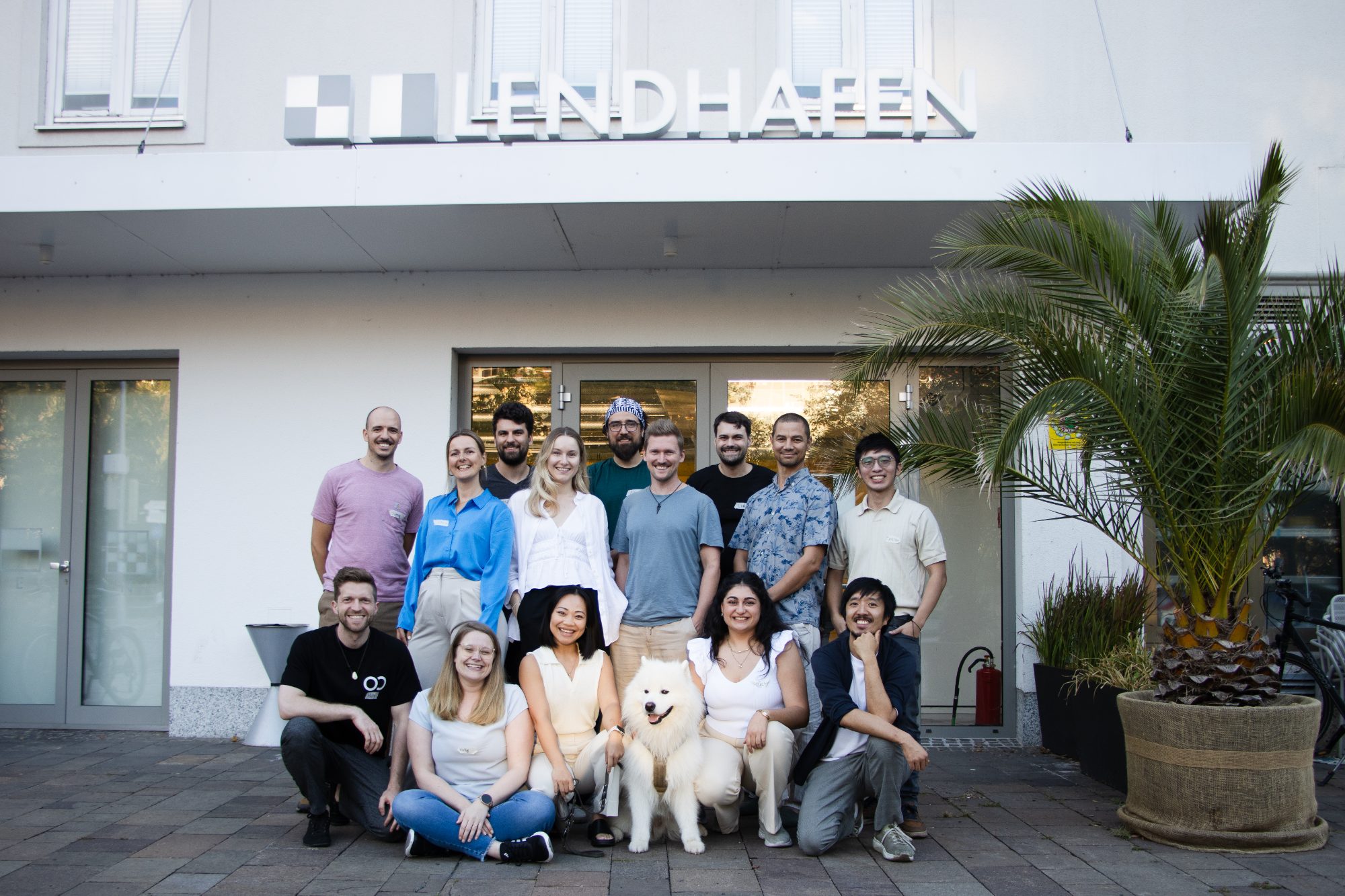
Participants and hosts of the Collective Intelligence Lab in front of Lendhafen, Graz
Collective Intelligence Lab · Playground Report

Twelve people. One day. Three problems no one solves alone.

What happens when people actually use the creative potential they carry, together?

5 September 2026 · Lendhafen, Graz · First edition
The short version
Date
5 Sept 2026
Location
Lendhafen, Graz
Participants
12
Challenges
3

On 5 September 2026, the Collective Intelligence Lab took place in Graz for the first time, hosted by human-intelligence.studio. Twelve participants from a wide range of disciplines came together for one day to work in three teams on concrete challenges for the City of Graz: Predictive Policy, Ecosystem Intelligence, and Climate Adaptation & Heat Protection.

The central insight: given the right frame and a shared vision, remarkably much becomes possible, even among people who had never met before and whose skills no one in the room knew going in.

The principle

Bring yourself. We give the frame.

The Lab is a day to co-create with talented, curious, and morally ambitious people in a highly creative environment, producing results that didn't exist that morning. Participants bring their perspectives, knowledge, and energy. The Lab provides the structure, the challenges, and the methods so that tangible approaches emerge on the very same day.

im·pre·neur
/ɪmˈprɛ.njɜː/  ·  n.  ·  impact + entrepreneur
Someone who turns creative potential into tangible output and measures their contribution by the impact it creates. Not just an entrepreneur. Not just an idealist. A person who shows up with a question, works with others to find an answer, and gets the work done.
pl. Impreneurs  ·  First recorded: Collective Intelligence Lab, Graz, 2026.
The day

One day, four phases

The flow took the group from a first arrival to concrete, presentable results.

01
Arrive & connect
Arriving and building real connection between participants, before diving into content.
02
Getting to the roots
Truly understanding the challenges instead of staying on the surface. The stated problem is rarely the real one.
03
Solve & produce
Working together in interdisciplinary teams on solution approaches and making them tangible.
04
Present & wrap-up
Presenting results and closing the day together.
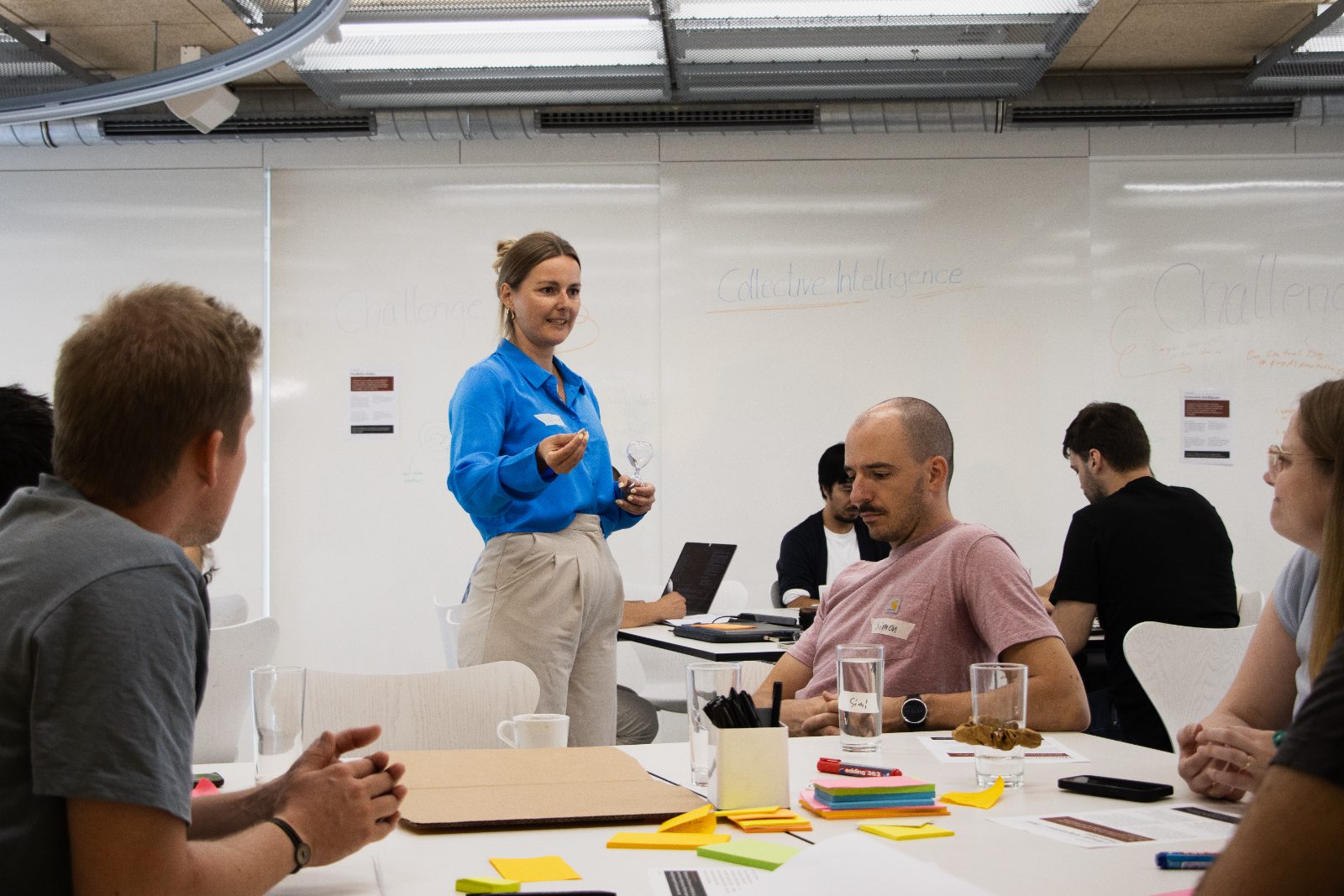
Facilitator guiding a team at the table
Phase 02Getting to the roots: asking why until the real problem shows.
The people

Come as you are

Twelve people from a wide range of disciplines took part, without knowing each other beforehand, and without knowing what skills were actually in the room.

The first half of the day was deliberately designed so that people contributed based on everything they know and can do, not just on what they currently do professionally. This opened the room to perspectives that would likely have gone untapped in a classic, role-based setting.

Creative methods and co-creation formats helped the teams quickly find productive collaboration despite having no shared history.

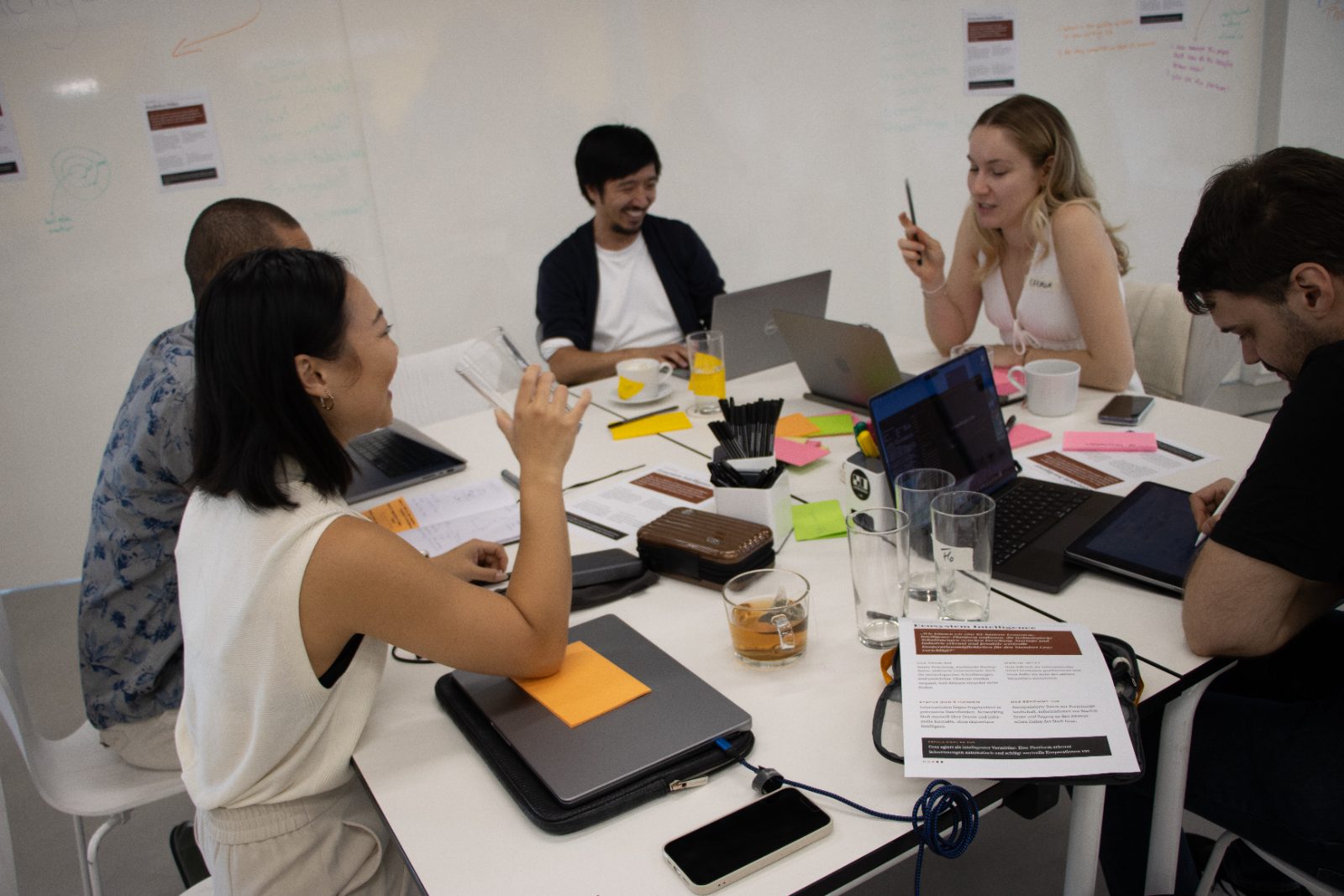
A team laughing and working together around a table
Solve & ProduceNo job titles at the table, just what everyone brought.
The challenges

Three problems that genuinely affect Graz

Provided by the City of Graz's Department for Economic and Tourism Development as real, current problems the city is facing. The teams' approaches serve as a kickstarter and will be presented to the department, where they can be pursued further.

In detail

What was asked. What the teams found.

01

Predictive Policy

The question
How might we build AI-driven scoring models that assess the impact of economic policy measures and funding programmes, and forecast their effect on local value creation before they launch?
The problem
Funding programmes and new economic zones can't currently be simulated in advance or evaluated with precision. Decisions tend to be reactive rather than preventive, and it is genuinely hard to measure whether a programme worked.
Why now
Graz's Economic Strategy 2030 and the city's climate goals require that funding lands where it creates the greatest leverage.
Success
Economic policy uses scoring models and simulation scenarios to allocate resources efficiently, and can demonstrate the impact of measures with solid evidence.
Team solution
A report handed over to the Department for Economic and Tourism Development, including a model to predict the impact of funds. The model was developed on open-source data of past funds distributed, and can predict impact by sector.
02

Ecosystem Intelligence

The question
How can an AI-based ecosystem intelligence platform detect technological overlaps between research, startups, and industry, and proactively suggest valuable collaborations for Graz?
The problem
Graz has strong research institutions, a growing startup scene, and established companies, yet the technological overlaps between them stay invisible, and opportunities are missed because the players simply can't find each other.
Why now
Graz wants to position itself as an international smart ecosystem, which means the city needs to take on the role of an active matchmaker.
Success
Graz acts as an intelligent matchmaker: a platform automatically detects technological overlaps and proactively suggests valuable collaborations.
Team solution
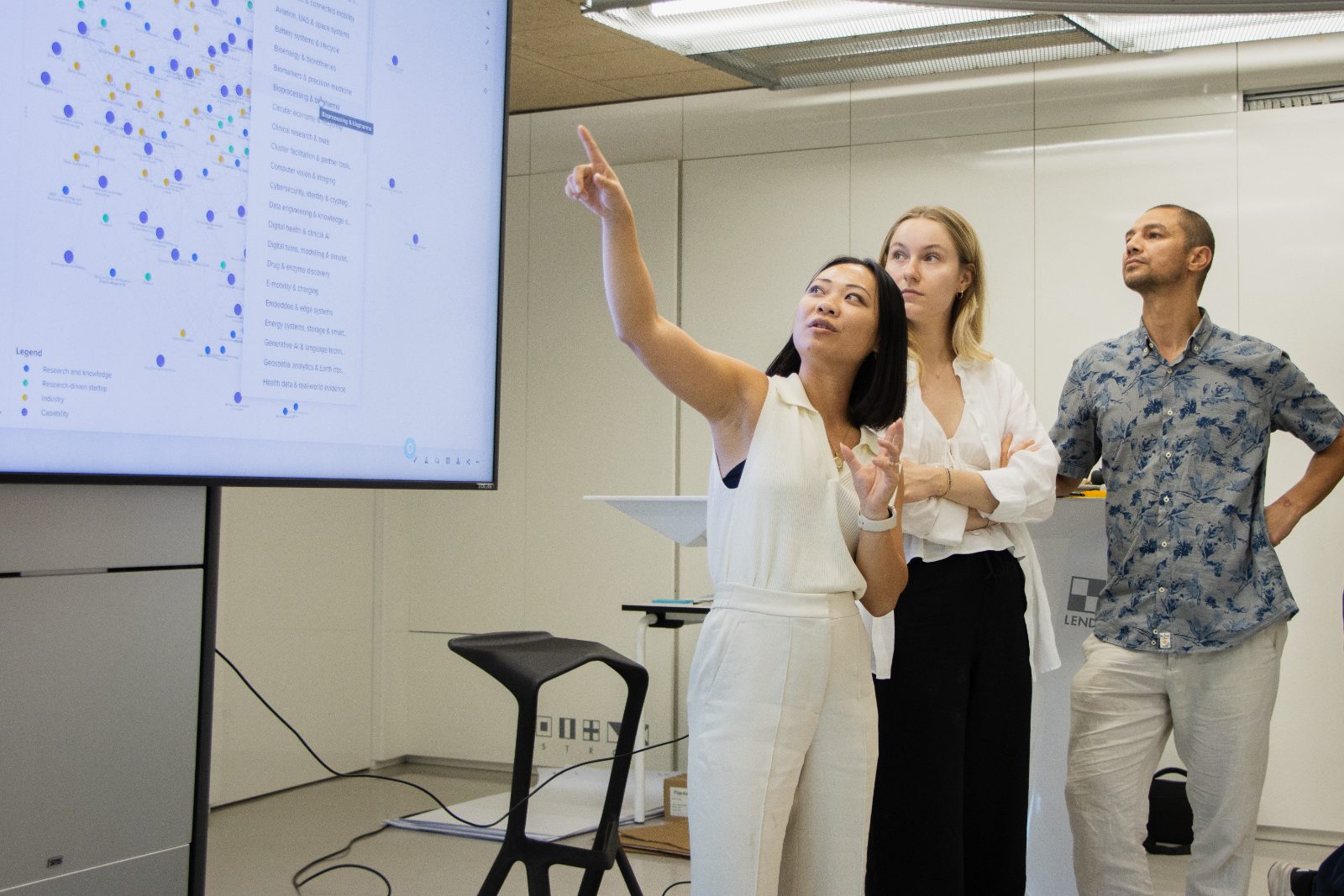
An interactive platform that maps the best matches for skills and knowledge based on a research request. Stakeholders looking for specific skillsets and resources within Graz can find the strongest overlaps in the area with one click.
Team presenting the ecosystem map on screen
03

Climate Adaptation & Heat Protection

The question
How do we prepare Graz for 60 heat days a year, and how do we protect first the people the heat already hits hardest today?
The problem
Graz is heating up faster than the city is adapting: from 4 heat days a year (1960 to 1990) to 17 (1991 to 2020), with around 60 projected for 2050, plus 13 desert days above 35°C. In June 2026 alone, Austria recorded 395 heat-related deaths.
Why now
The window between 17 and 60 heat days a year is closing now, and heat already shapes daily life for everyone, hitting older, sick, poorer, and isolated people hardest.
Success
Deliberately left open. The first success is identifying the big, still-unused levers between existing measures.
Team solution
cool town: an app and resource platform showing how to best adapt during heat waves, where and how to rent cooling equipment, and which routes are coolest on hot days. Rolled out via app and on digital billboards near bus stops, so people in the streets and without housing options can use it as well.
The feedback

What participants said

Process & depth

  • The depth of the analysis: asking why, why, why, until we reached the real problem.

People & collaboration

  • Having everyone on the team involved in solving the problem. No one just watched.
  • Getting to really understand the problems, and meeting the people.

Energy & outcome

  • The laughter, the clarity of the day, the flow.
  • The food, the conversations, the presentations.
  • Creating something ambitious together with strangers, in such a short time. Something that can actually help.
The insight

Given the right frame and a clear vision, far more becomes possible than any single team or single discipline could achieve alone.

Findings & learnings
  1. A clear frame and a shared vision unlock remarkable potential, even among people who had never met and couldn't yet gauge each other's strengths.
  2. The "come as you are" approach showed that contributions reaching beyond a person's formal professional role are especially valuable for interdisciplinary problem-solving.
  3. Creative and co-creative methods were central to bringing teams with no shared history quickly into productive collaboration.
  4. The structure, arriving, truly understanding the problem, working on solutions together, and presenting, was key to having tangible results by the end of the day.
What's next

The approaches developed during the Lab will be presented to the challenge providers and serve as a starting point for further work. Given the results of this first run, continuing the format, including at a larger scale, is the natural next step.

Facilitated by
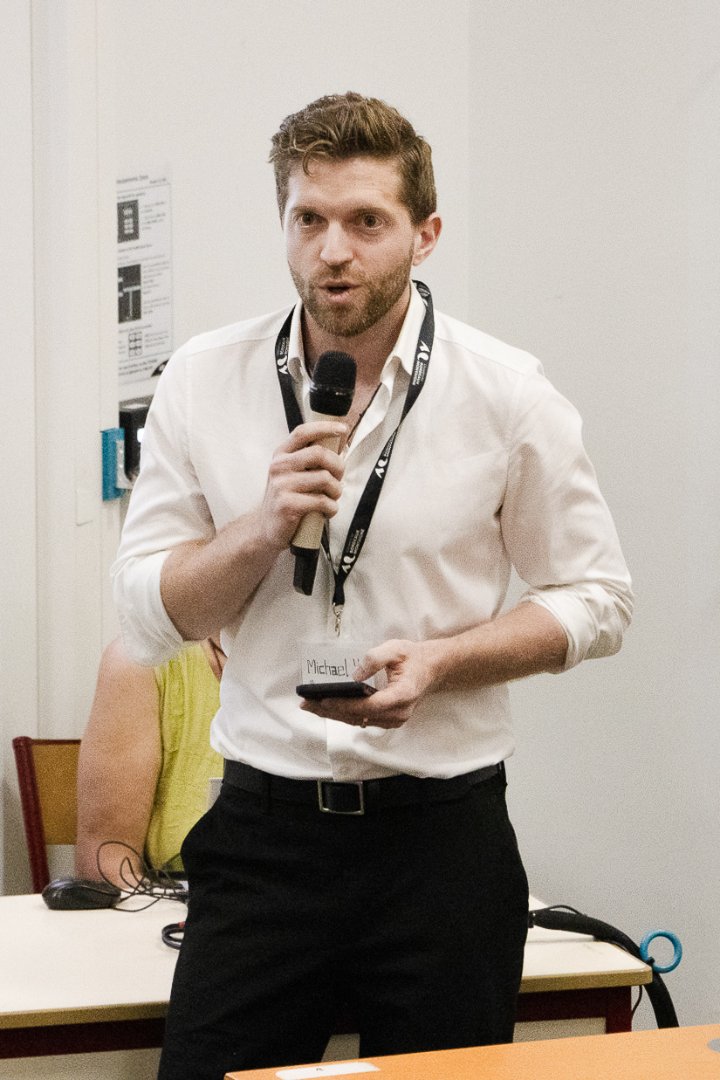
Michael Yang
Michael Yang
Facilitator and trainer based in Austria. Founder of human-intelligence.studio.
human-intelligence.studio
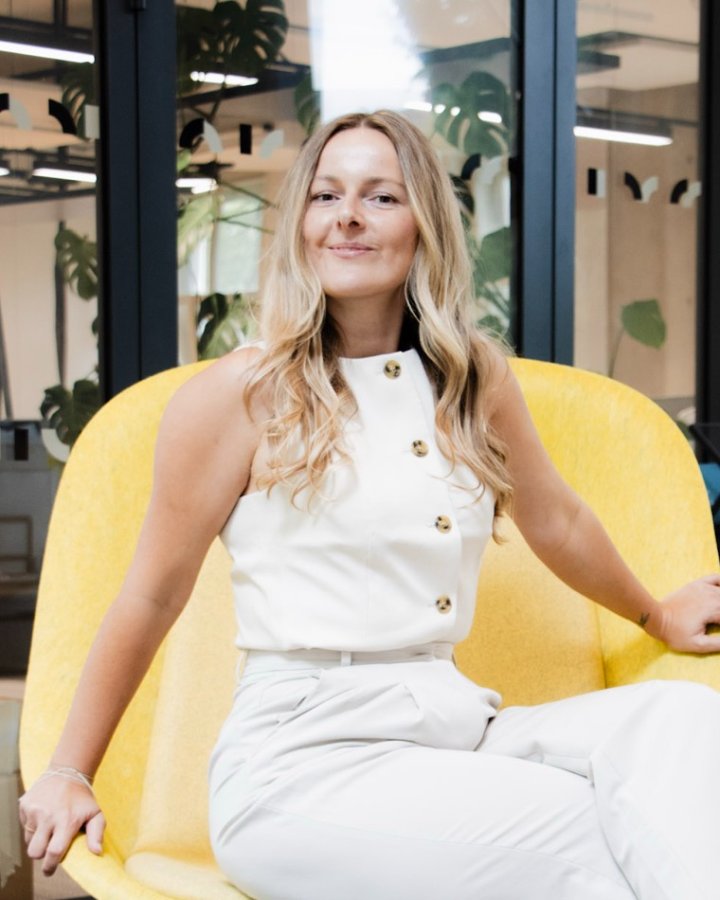
Elisabeth (Ellie) Obermann
Impact facilitator and moderator. Founder of revaluetion.
revaluetion
Partners & thanks
  • oikos Consultingoikos ConsultingStrategic partnership
  • Stadt GrazCity of Graz · Department for Economic and Tourism DevelopmentChallenge provider
  • ganzgrazganzgrazChallenge provider

Warm thanks to all partners, and to the twelve participants who spent a full day bringing their energy to an open, unfamiliar process.

Want to be in the room next time?

The next Lab is in the making. Get in touch if you'd like to take part, bring a challenge, or partner with us.